

Handgun vs. Rifle Ammunition: Understanding the Variables
Whether you are a reloader or a high-volume shooter, understanding the fundamental differences between handgun vs rifle ammunition is critical for both safety and performance. While they both rely on the same four components—brass, primer, powder, and projectile—the way those components interact varies wildly between platforms.
The primary variables that separate these two worlds are velocity, pressure, and burn rate.
1. The Velocity and Pressure Gap
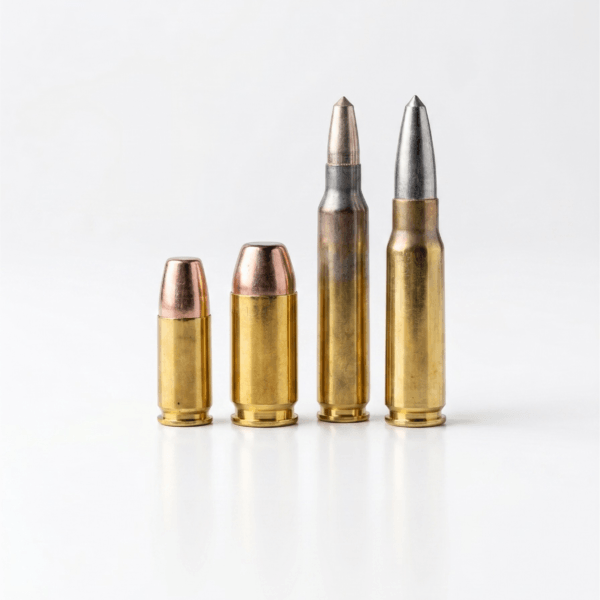
The most immediate difference is the speed at which the projectile travels. Handgun rounds generally operate at subsonic or low-supersonic speeds (typically 800 to 1,500 FPS). Rifle rounds, conversely, are designed for high-velocity performance, often exceeding 2,700 to 3,000 FPS.
This velocity difference is driven by pressure. Rifles are built to withstand significantly higher chamber pressures than handguns. This is why you cannot simply use handgun powder in a rifle cartridge; the faster burn rate could lead to catastrophic pressure spikes.
2. Powder Burn Rates: Fast vs. Slow
In a handgun, you have a very short window (the barrel length) to accelerate the bullet. Therefore, handgun ammunition typically uses “fast-burning” powders that achieve peak pressure almost instantly.
Rifle ammunition requires a “slow-burning” powder. The goal is to maintain a consistent push on the projectile as it travels down a much longer barrel. If you use slow-burning rifle powder in a short handgun barrel, much of the powder will exit the muzzle unburned, resulting in a massive muzzle flash and poor velocity.
3. Projectile Design and Ballistic Coefficients
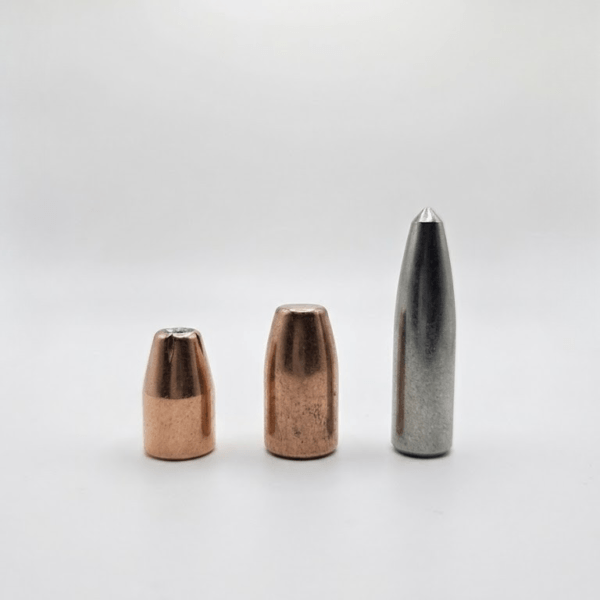
Handgun projectiles are typically blunt or rounded (think 9mm FMJ or Hollow Points). At short distances, aerodynamics matter less than mass and expansion.
Rifle projectiles are “ogive” or aerodynamic in shape to maximize their Ballistic Coefficient (BC). Because they are intended for long-range engagement, rifle rounds must cut through the air with minimal drag to maintain stability over hundreds of yards.
Why It Matters for the High-Volume Shooter
At Copper N Lead, we specialize in providing components for those who understand these variables. Whether you are sourcing bulk brass for your handgun training or precision projectiles for your rifle bench, matching the component to the intended velocity and pressure is the key to accuracy.