

What Are Range Seconds? The Truth About Blemished Ammunition
If you are a high-volume shooter looking to stretch your training budget, you’ve likely come across the term “Range Seconds” while sourcing components or bulk rounds. In the shooting community, the name often triggers two completely opposite reactions. Some marksmen immediately fill their carts, knowing they are getting an absolute steal. Others hesitate, wondering if they are compromising on safety.
So, what are range seconds, and are they safe to feed into your firearms?
The short answer is yes—if you are buying from a reputable manufacturer. However, a massive point of confusion exists because some corners of the market lump safe, cosmetic blemishes in with dangerous, experimental rounds. Let’s break down the critical variables so you can buy with confidence.
Cosmetic Blemishes vs. Operational Integrity
True Range Seconds are rounds or components that failed a manufacturer’s cosmetic inspection, not a functional or mechanical one.
During high-speed automated loading, a brass casing might get a water spot from the washing process, a superficial scuff from a sorting bin, or a minor discoloration during the annealing process. Similarly, a projectile might have a tiny scratch on its copper jacket.
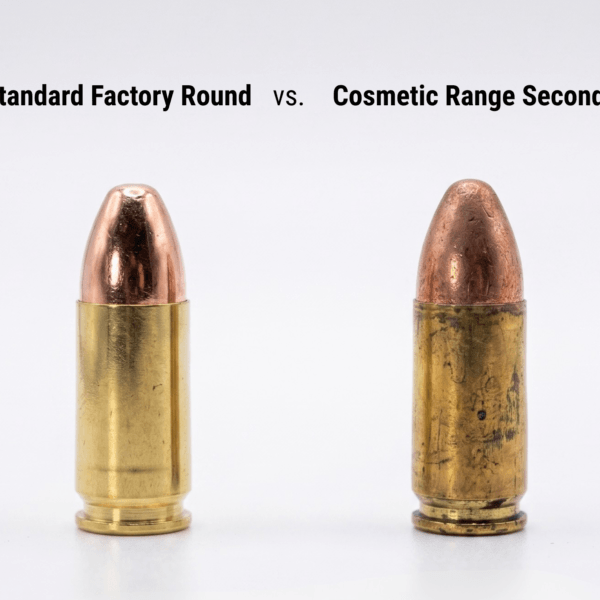
To an automated laser inspection system, a discoloration looks like an error, and the round gets kicked into the “Seconds” bin. Mechanically, internally, and structurally, the round is identical to a premium grade box. The internal pressures, primer seating, and neck tension are entirely unaffected. For high-volume range training, transitions, and steel drills, they offer the exact same ballistics at a fraction of the cost.
The Red Line: Experimental and Unsafe Rounds
Here is where the distinction becomes critical. Range Seconds should never be confused with experimental, unvetted, or “shoot at your own risk” ammunition.
In some circles, “seconds” is improperly used to describe leftover experimental development batches, heavily corroded military surplus, rounds with deep case wall gouges, or scrap loaded by unverified sources using mismatched components.
Those types of rounds are genuinely unsafe. A deep structural crease in a brass casing or a improperly seated primer can cause catastrophic pressure spikes or squib loads.
At Copper N’ Lead, our definition of a Range Second is completely clear: it is a functional, structurally sound, and meticulously screened component or round that happens to have a surface-level cosmetic blemish. If a piece of brass or a projectile has a flaw that threatens its structural integrity or chamber pressure, it goes straight to the recycle bin—never to our customers.
Why High-Volume Shooters Choose Seconds
When you train aggressively, you don’t need shiny, showroom-ready ammunition to hit a stationary steel target. You need reliability, correct pressures, and cost efficiency.
Understanding the “why” behind your components gives you a massive advantage. Buying verified cosmetic seconds allows you to double your training volume without doubling your spending, keeping your skills sharp while protecting your gear.